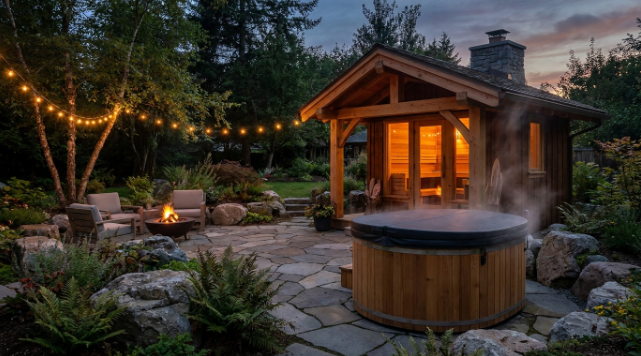
A 4 person sauna that a whole household actually uses comes down to four decisions: a bench layout with real shoulder room for four adults, a heater matched to cubic footage rather than floor space, an honest look at the 240-volt circuit most models require, and a spot in the yard or basement that people will walk to on a Tuesday night. Interior footprints in this category typically run 5 by 6 feet to 6 by 6 feet, with heaters between 6 and 8 kilowatts. Get those four things right and the cabin gets used weekly for years. Get them wrong and it becomes storage for pool towels by month six.
What Bench Layout Actually Seats Four People?
Bench configuration decides whether a 4-person sauna feels roomy or cramped more than any other single spec. An L-shaped bench along two walls generally seats four with more elbow room than a straight bench along one wall, because it spreads people around a corner instead of lining them up shoulder to shoulder. Two-tier layouts, with a lower bench for feet and a higher bench for sitting, let taller family members sit up where the air runs hottest while shorter kids or guests take the lower tier where the temperature is milder. Before buying, check the listed bench depth. Anything under 18 inches is tight for an adult to sit sideways or lie back, which matters on a longer session.
See also: PT-141: The 6-Point Checklist Before You Shop, No Fluff
How Much Heater Does a Four-Person Cabin Actually Need?
Heater output is sold in kilowatts and should track cubic footage, not square footage of floor space. A tall ceiling or a big glass front loses heat faster and needs more capacity than a low, tightly sealed box with the same footprint. Most 4-person cabins land in the 6 to 8 kilowatt range, and a reputable maker will ask about ceiling height and window area before recommending a specific model rather than selling one heater size across every cabin in the line. An undersized heater runs constantly and still falls short of target temperature, which shortens the heating element’s working life and leaves the room feeling lukewarm on cold nights, exactly when a family wants it most.
What Electrical Work Should You Plan For Before Ordering?
This is the line item that catches first-time buyers off guard. Most heaters above 6 kilowatts, which covers the bulk of the 4-person category, need a dedicated 240-volt circuit, and not every home has spare capacity in the panel for one without an upgrade. Get a quote from an electrician before the sauna arrives, since the cost swings a lot depending on how far the run is from the panel and whether the panel itself needs work. Outdoor units typically also need a pad or footing and, depending on local code, a disconnect switch mounted within sight of the heater. None of this shows up on the unit’s price tag, so treat it as its own line item rather than a surprise add-on.
What Does a 4 Person Sauna Cost Once Everything Is Installed?
Sticker price rarely tells the whole story in this category. A 4-person cedar cabin from an established maker typically lists between $4,500 and $8,500 for the unit and heater, before delivery and electrical work are added. Specialty retailers including Almost Heaven, Redwood Outdoors, and SweatDecks.com publish model-by-model pricing worth comparing line by line, particularly checking wood thickness, heater wattage, and what the listed price does and does not include. A unit that looks $1,000 cheaper than everything else in its size class is worth a closer look at the specs, since that gap usually shows up somewhere in wood grade, heater brand, or warranty length. Budget an additional $500 to $2,000 for electrical work and site prep on top of the unit price.
Indoor or Outdoor: Which Setup Fits a Family Better?
Outdoor cabins, whether barrel-style or a square cedar room on a deck, handle year-round use well and keep sauna heat and humidity out of the house entirely, which matters if the household includes people sensitive to a warm, damp basement. Indoor installs cut the walk in bad weather to a few steps and make late-evening or early-morning sessions more likely to actually happen, since nobody has to put on boots first. Households in a snowy climate who plan to use the sauna through winter often lean indoor or attached for that reason, while households with more yard than basement, or who want the sauna out of daily foot traffic, go outdoor. Neither is the wrong call; the honest question is which one people will still walk to in January.
How Long Does Installation Actually Take?
A 4-person cabin sold as a prebuilt or panelized kit typically goes from delivery truck to first session in a weekend for two people working together, assuming the electrical circuit is already in place. Barrel-style units usually assemble faster than square cabins since fewer wall panels and seams need to line up. The electrical work is the item that most often stretches the timeline past a weekend, since scheduling an electrician and, if needed, a permit inspection can add a week or two before the heater is legally allowed to run. Site prep, whether that is leveling gravel or confirming an existing deck’s load rating, is worth finishing before the cabin arrives so delivery day is not also the first day anyone realizes the pad is not ready.
What Does the Research Say About Regular Sauna Use?
The health claims attached to sauna marketing hold up better than most wellness-product claims, though the underlying research is narrower than the ads suggest. A widely cited review in Mayo Clinic Proceedings summarized cardiovascular associations across multiple studies of regular sauna bathers, including effects on vascular function and blood pressure. A separate systematic review in Evidence-Based Complementary and Alternative Medicine reached similar conclusions about the clinical effects of regular dry sauna use. An earlier review in The American Journal of Medicine covered both benefits and known risks, including cautions for people with unstable cardiovascular conditions. These are population-level associations, mostly built on regular users over years, not proof that a few sessions a month will change any one person’s health outcome, and anyone managing a heart condition should raise it with a doctor before starting regular use.
Frequently Asked Questions
How many people can actually fit in a 4 person sauna at once? Four adults fit with enough shoulder room to sit without touching, and cabins in this category typically measure 5 by 6 feet to 6 by 6 feet on the interior, which is the working minimum for that.
What size heater does a 4 person sauna need? Most call for 6 to 8 kilowatts, with the higher end needed for cabins with large windows or tall ceilings.
Does a 4 person sauna need a special electrical circuit? Heaters above 6 kilowatts generally need a dedicated 240-volt circuit. Get an electrician’s quote before ordering.
Is a 4 person sauna big enough for a family of four to use together? Yes, for a typical session, though households that host guests often should weigh a 6-person model instead.
References
- Cardiovascular and Other Health Benefits of Sauna Bathing: A Review of the Evidence, Mayo Clinic Proceedings, 2018
- Clinical Effects of Regular Dry Sauna Bathing: A Systematic Review, Evidence-Based Complementary and Alternative Medicine, 2018
- Benefits and risks of sauna bathing, The American Journal of Medicine, 2001
By Melissa Byrne