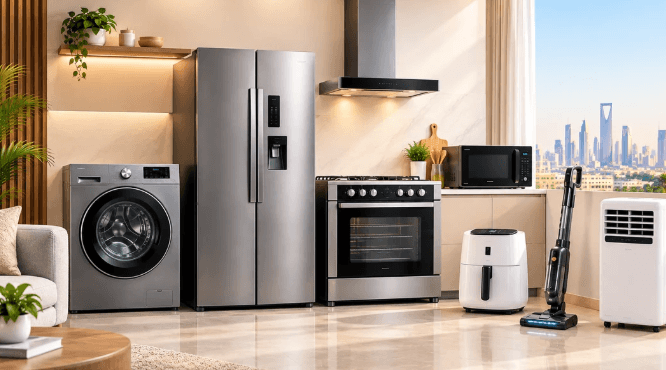
Every home has different requirements. The size of a property, the number of people living there and the types of household tasks performed can all influence which appliances are most suitable.
A product that works well in a spacious family home may not be practical in a small apartment. For this reason, choosing household technology should begin with an assessment of available space and everyday routines.
Assessing Your Household Requirements
Before purchasing an appliance, consider how frequently it will be used and which tasks it needs to support.
A household with children or pets may have different cleaning requirements from a single-person home. Similarly, people living in compact apartments may prioritise lightweight equipment and easy storage.
Useful questions include:
- How large is the area where the appliance will be used?
- How often will it operate?
- Who will use it?
- Is storage space limited?
- Are there particular cleaning or maintenance needs?
- Does the home have suitable electrical connections?
These details help narrow down the options.
Choosing Appliances for Smaller Homes
Space is an important consideration in apartments and compact properties. Large appliances can be difficult to store and may restrict movement in frequently used areas.
Smaller equipment may provide greater flexibility, particularly when it can be stored in a cupboard or utility area.
However, compact size should not be the only selection criterion. Buyers should still check performance, capacity and whether the appliance can handle the intended workload.
Considering Cleaning Requirements
Cleaning equipment is a common household purchase, but the best option depends on the home environment.
Flooring type, furniture arrangement, stairs and the presence of pets can all influence the choice. Some households may prefer a lightweight device that is easy to carry, while others may need equipment designed for more frequent or demanding cleaning.
Before purchasing, check which surfaces the appliance supports and whether additional attachments are included.
Understanding Filtration and Airflow
Some home appliances use filters to capture dust and other particles during operation. The type of filtration system and the manufacturer’s maintenance instructions should be reviewed.
Buyers should check whether filters are washable or replaceable and how frequently replacement may be needed.
It is also important to understand that appliance performance depends on correct use and maintenance. A filter that is blocked or incorrectly installed may affect operation.
Design and Ease of Storage
A practical appliance should be easy to handle and store. Weight, dimensions, cable length and attachment storage can all influence usability.
People with limited storage may prefer a product that can be kept upright or has a compact accessory system.
If an appliance will be used across several floors, handling comfort becomes particularly important. Product specifications and, where possible, an in-person demonstration can help buyers assess these factors.
Comparing Product Options in Hong Kong
Consumers researching Dyson Hong Kong can explore available products and compare models according to their living environment and household needs.
Check the exact model specifications, included accessories, warranty and availability of replacement parts. Local product information can also help buyers understand delivery and service arrangements.
Rather than selecting a model based only on appearance, compare its features with the tasks it will perform at home.
Maintenance and Household Planning
An appliance should be considered part of a wider household routine. Regular cleaning, appropriate storage and timely replacement of consumable parts can help maintain usability.
It may be helpful to keep product manuals and maintenance records in one place. This makes it easier to follow recommended cleaning schedules and find relevant information when support is needed.
Households should also avoid using appliances outside the manufacturer’s instructions, particularly where electrical safety or specialised components are involved.
Making a Cost-Conscious Decision
The right appliance should balance performance and cost. Consider the initial purchase price, energy consumption, replacement parts and expected maintenance requirements.
A premium product may be useful for households with demanding needs, while a simpler model may be enough for occasional use.
The most valuable purchase is not necessarily the most expensive one. It is the product that fits the space, routine and budget.
FAQs
1. What should I consider when buying appliances for a small apartment?
Check dimensions, weight, storage requirements, noise levels and ease of maintenance. Make sure the appliance can perform the tasks you need without taking up unnecessary space.
2. Are lightweight appliances always better?
Not necessarily. Lightweight designs can improve portability, but performance, durability and suitability for the intended task are equally important.
3. How can I maintain household appliances?
Follow the manufacturer’s instructions, clean removable components appropriately, replace filters when required and store equipment safely.
Conclusion
Choosing household appliances is easier when decisions reflect the home’s size, layout and daily routines. By comparing dimensions, performance, maintenance and cost, consumers can select equipment that supports their needs without creating unnecessary inconvenience. A practical fit is more important than choosing a product simply because it is popular.